Brasília wasn't built. It was designed.
In a thousand days, in the middle of the cerrado, the greatest work of urban art of the 20th century was born. This is the guide to understanding — and living — the architecture that made an entire city a World Heritage Site.
Some cities grow. Brasília was conceived — every axis, every palace, every curve of concrete came off a drawing board before it existed in the cerrado. When you walk along the Esplanada dos Ministérios, you're not in a historic centre that piled up over centuries: you're inside an idea, built whole, in three years and ten months. That's why looking at Brasília slowly changes the one who looks.
The four names you need to know
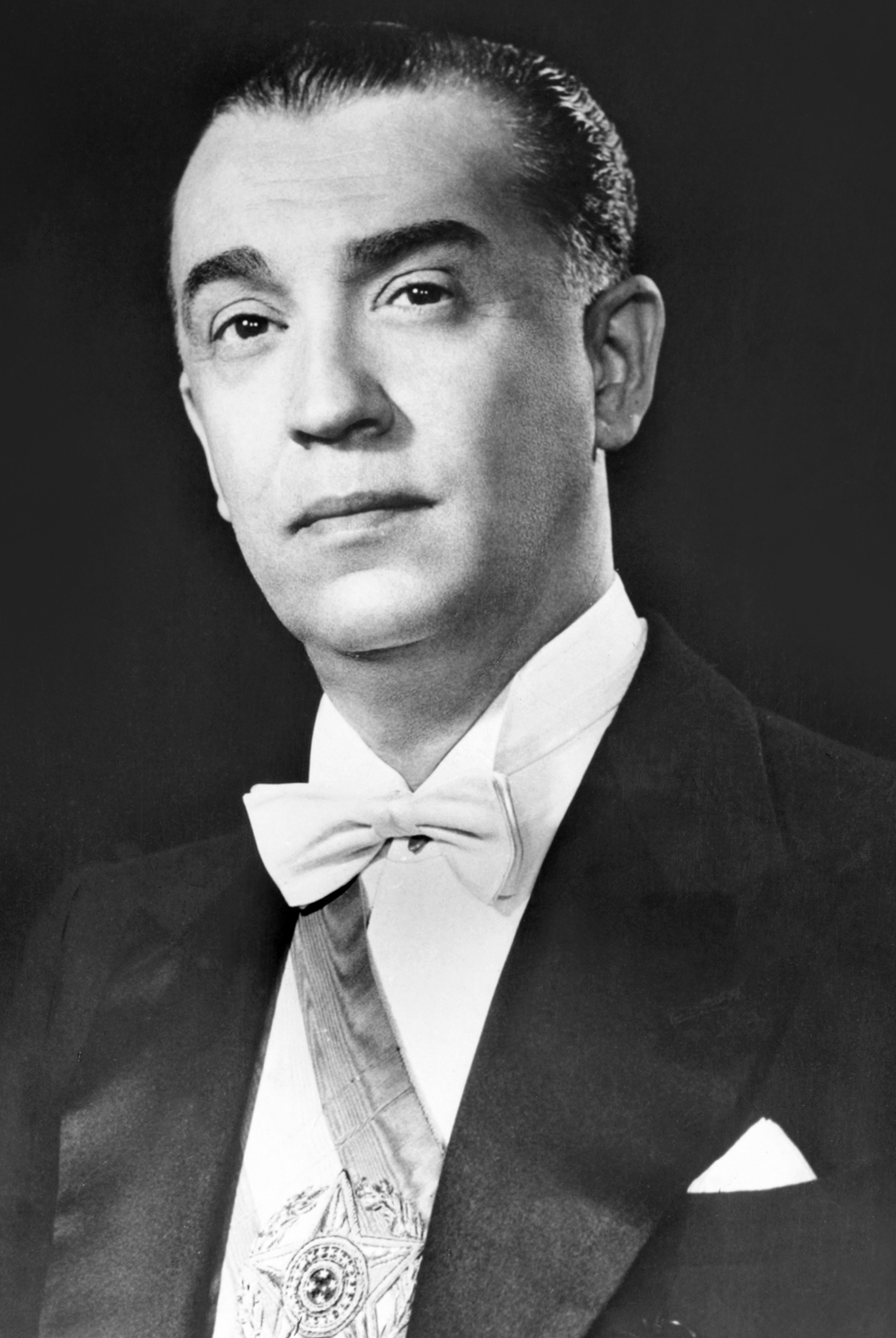
Brasília is a collective work, but four names explain almost all of it — and, not by chance, they are the same ones that give their names to the Villela Stay houses.
Lúcio Costa — the man who drew the city
In 1957, Lúcio Costa won the Pilot Plan competition with an almost simple gesture: two crossing axes, like making the sign of the cross or opening your arms to take possession of a place. From that line came the Monumental Axis and the Road Axis, the superblocks, the monumental scale of power and the human scale of those who live there. Costa didn't design buildings — he designed how people live. Understanding Brasília starts with understanding that everything there has intention.
Oscar Niemeyer — the curve that became a symbol
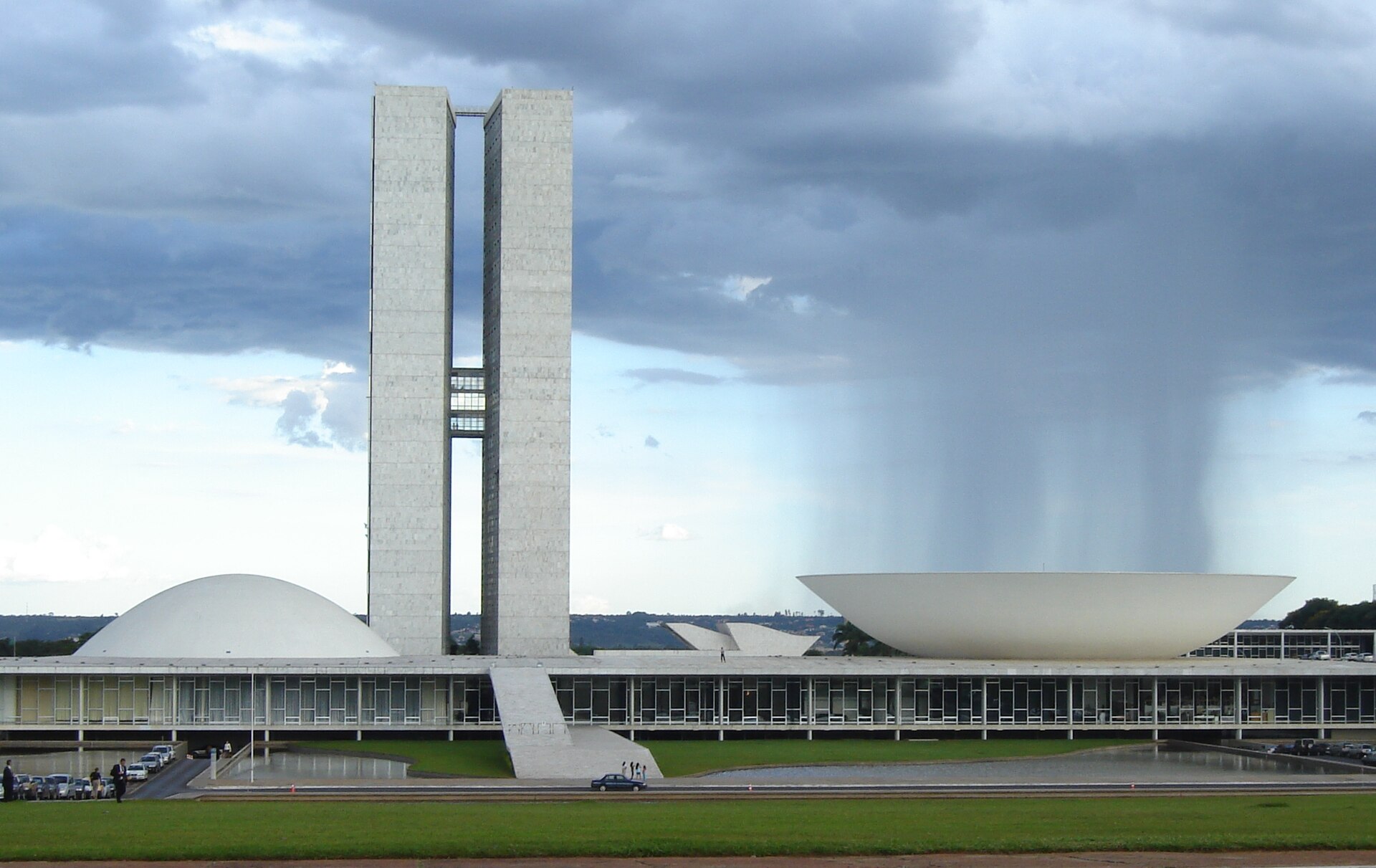
If Lúcio Costa gave the logic, Niemeyer gave the poetry. "It is not the right angle that attracts me, nor the straight line, hard and inflexible. What attracts me is the free, sensual curve," he wrote. His curves are in the Cathedral that looks like hands raised to the sky, in the columns of the Alvorada, in the dome and bowl of the Congress. Niemeyer proved that reinforced concrete could be light, lyrical, Brazilian. He designed the capital's main monuments — and went on creating until he died, at 104.
Roberto Burle Marx — the garden as a work of art
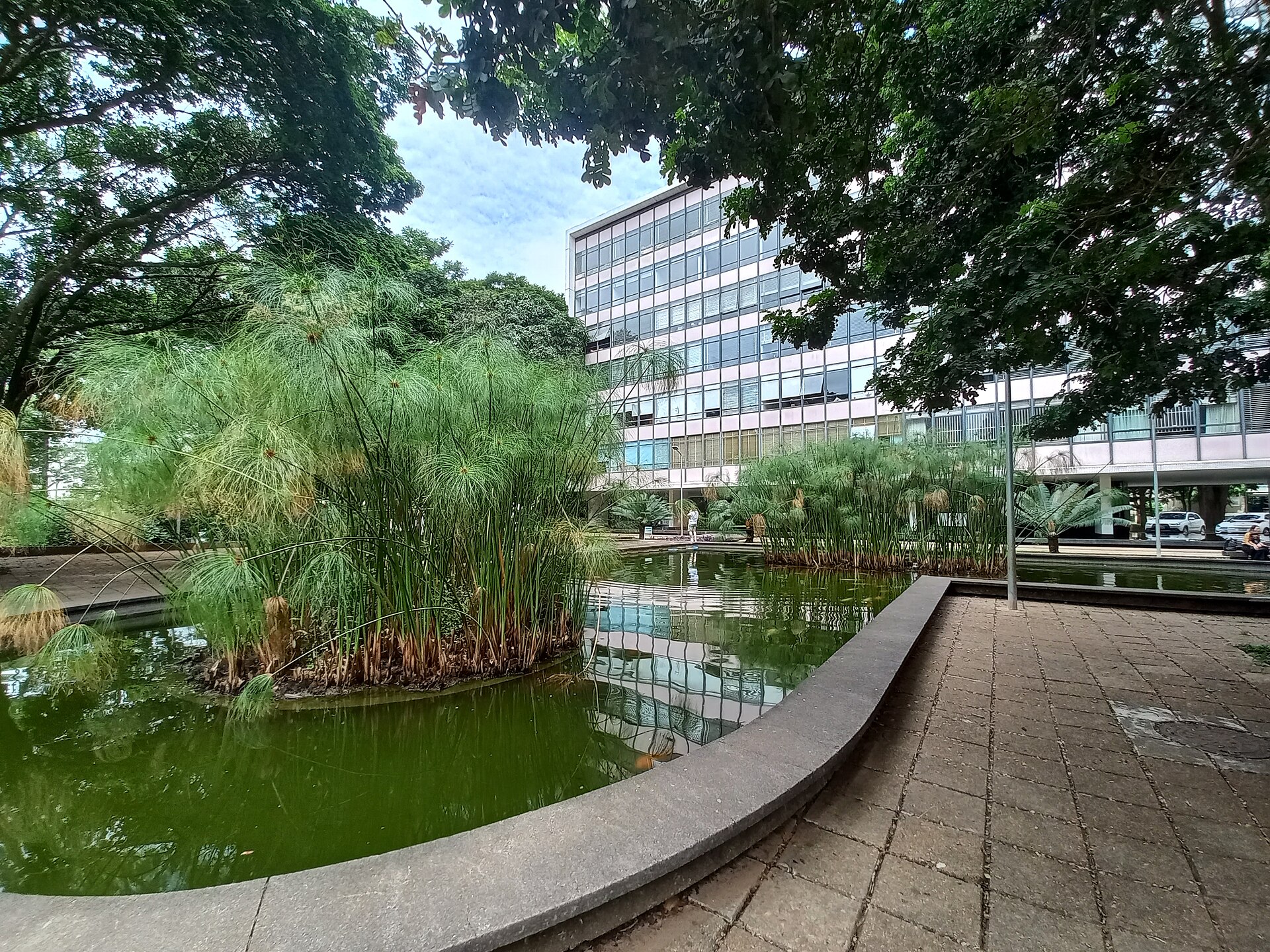
The Brasília you see is not only concrete and sky: it is also designed greenery. Burle Marx treated landscaping as painting — masses of tropical plants composing organic shapes that converse with the architecture. He taught the world to see Brazilian flora as heritage, not weeds. The Itamaraty gardens are one of his masterpieces. We dedicate the whole landscaping guide to him →
Athos Bulcão — the art that covers the city
Look at the walls. The blue-and-white tiles of the little Nossa Senhora de Fátima church, the airport panels, the reliefs spread across dozens of buildings: they are by Athos Bulcão, the artist who dressed Brasília. His work with modular patterns — repetition with variation, never identical — is proof that Brazilian modernism had warmth, colour and an artist's hand.
The essential architecture itinerary
If you have one day, do it in this order — it's how the light and the traffic help:
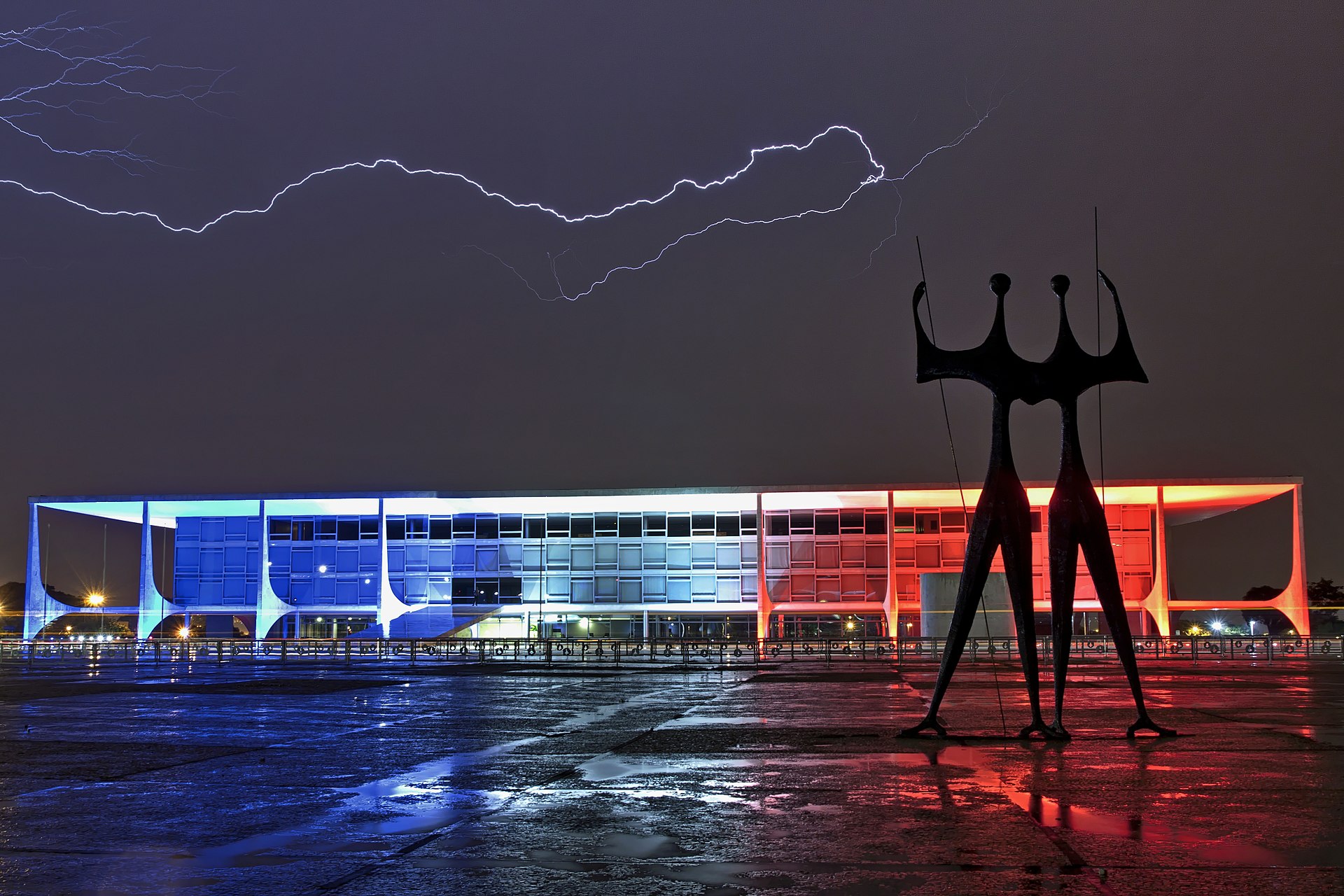
- Morning — Praça dos Três Poderes. The symbolic heart of the Republic: the Planalto, the Supreme Court and the Congress around a square that is itself an open-air museum. Start early, before the harsh sun.
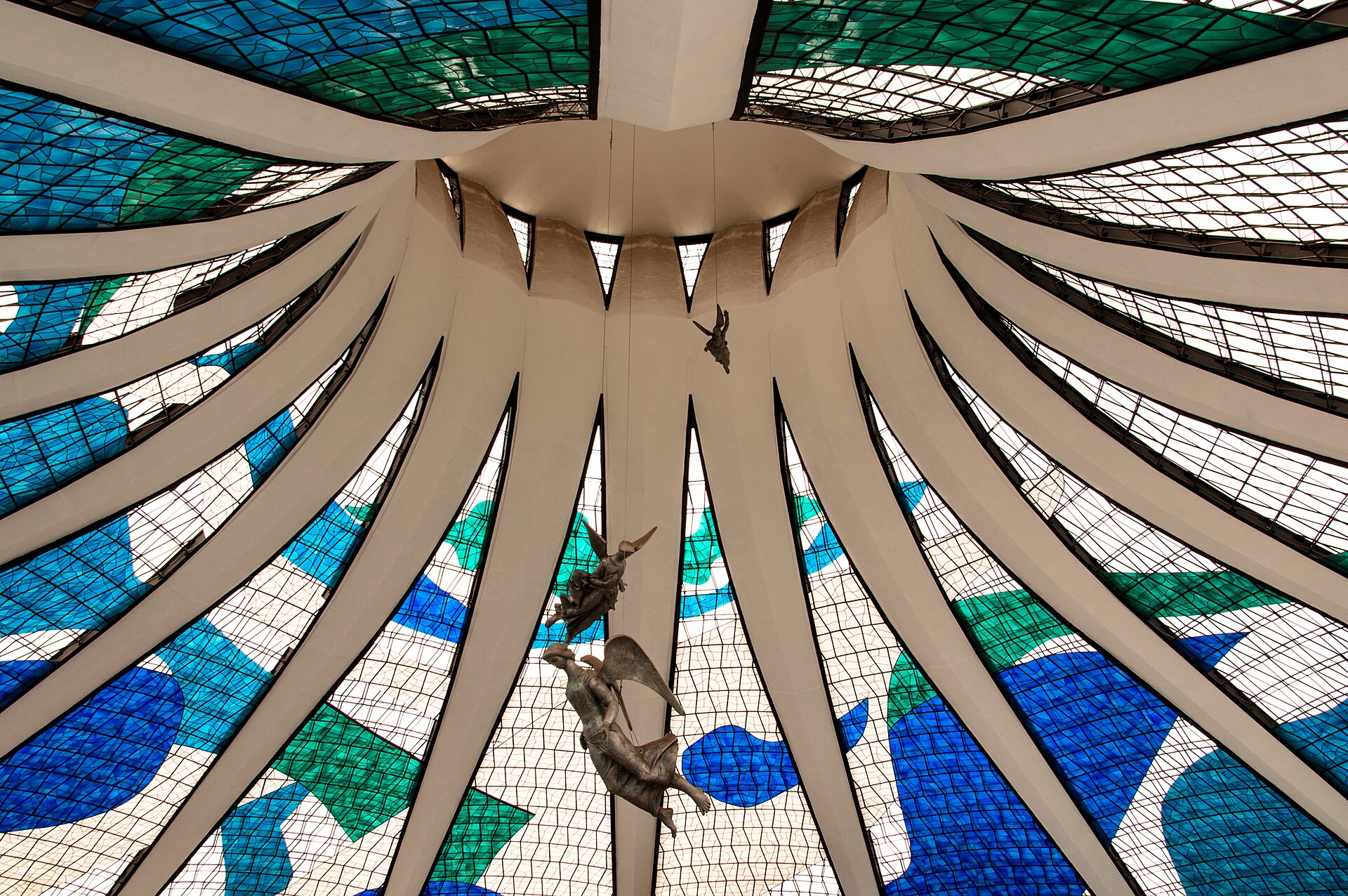
- Mid-morning — Metropolitan Cathedral. Outside, the 16 hyperboloid columns; inside, the light pouring through Marianne Peretti's stained glass and Alfredo Ceschiatti's suspended angels. It may be the most beautiful thing in the city.
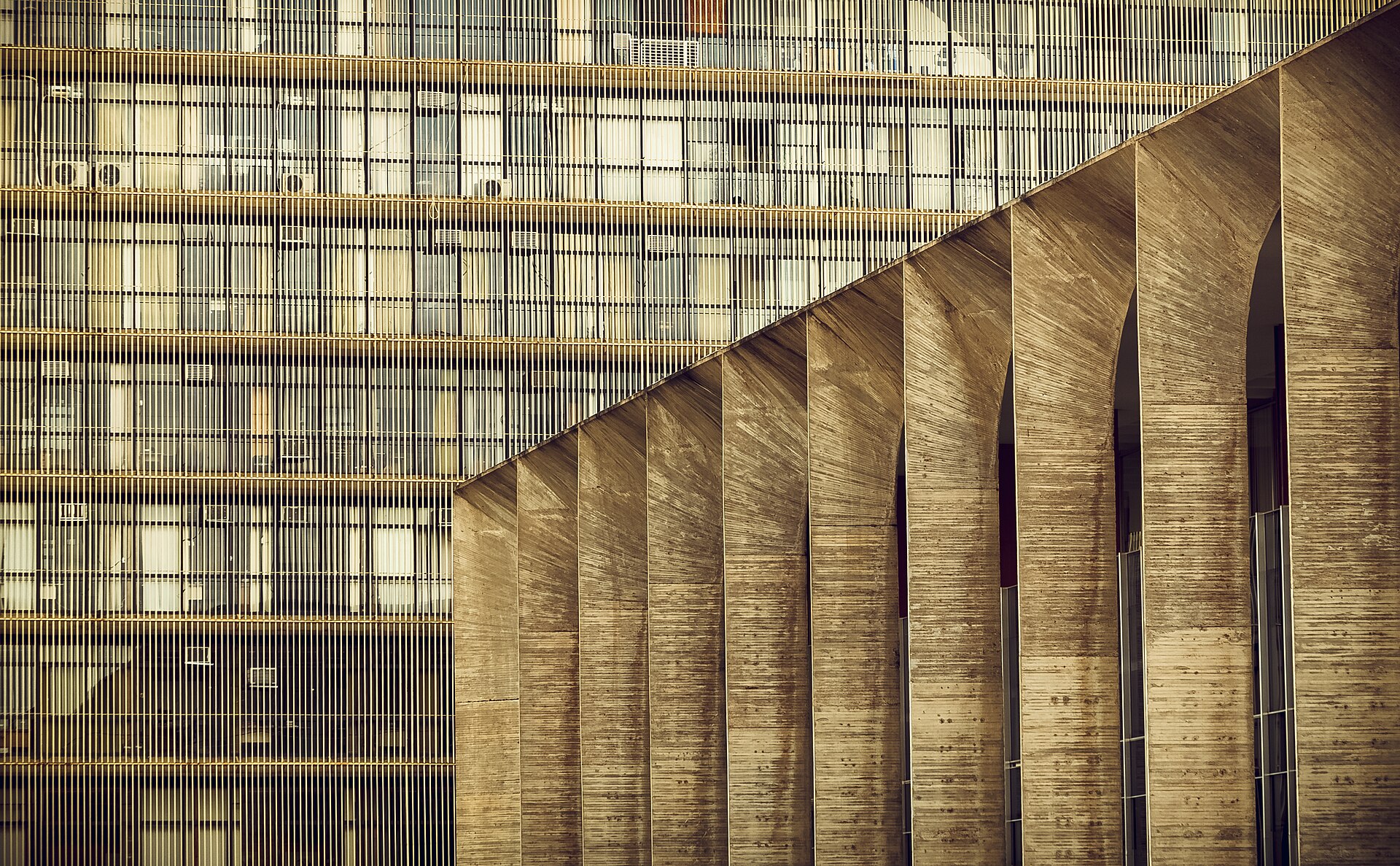
- Lunch — Itamaraty or Asa Sul. The Itamaraty Palace, with its arches over the reflecting pool and Burle Marx's gardens, is a must. Where to eat is in the food guide →
- Afternoon — Memorial JK and the Monumental Axis. Juscelino's mausoleum, with the statue beneath the stylised sickle, closes the meaning of it all: here rests the man who had the courage to build this.
- Sunset — Ermida Dom Bosco. A small Niemeyer chapel (1957) overlooking Lake Paranoá. The best late afternoon in Brasília, and 10 minutes from our houses.
Why this matters for your trip
Because Brasília does not give itself up to those who rush past. It reveals itself to those who know what they're seeing — and to those who stay close enough to return to the Cathedral at dusk, or catch the Ermida at the right moment. It was with that gaze that Villela Stay was born: houses in Lago Sul that belong to the same aesthetic lineage as the city — integrated with the garden, open to the light, without excess. You don't visit Brasília's architecture. You wake up inside it.